Premium vs. Standard Brake Pads: What’s the Difference?
How brake pad materials compare, the tradeoffs to expect and why inspection matters more than the label on the box.
Trusted by Happy Customers
Why pad material matters
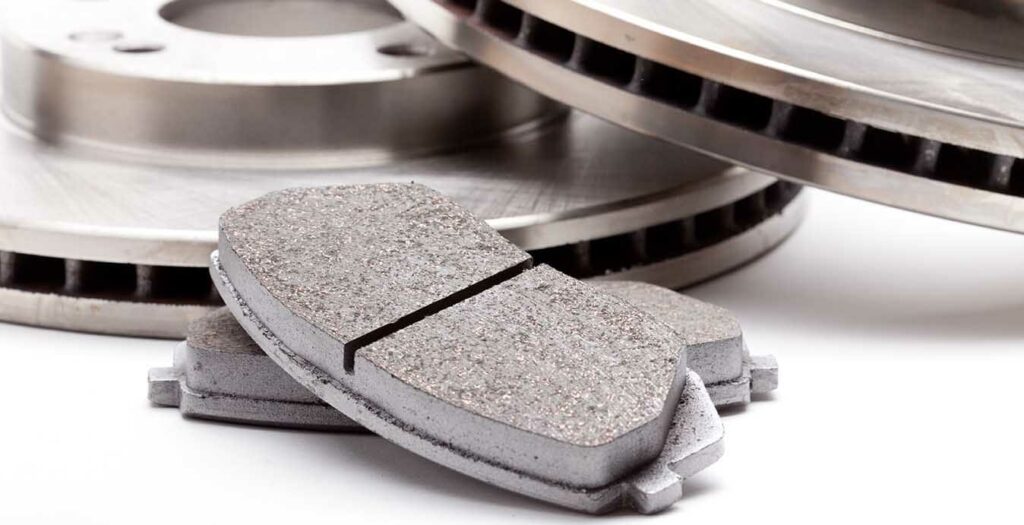
Brake pads create the friction that slows your vehicle. They are made from different materials, and each has tradeoffs. The right choice depends on your vehicle, how you drive and what the manufacturer recommends.
Common pad materials
- Organic: made from fibers and resins; typically quiet and gentle on rotors, but they wear faster and can struggle with heavy loads or high heat
- Semi-metallic: contain metal fibers; they handle heat and heavy use well, but they can be noisier, create more dust and wear rotors faster
- Ceramic: typically quiet with fine, light-colored dust and stable performance, and they usually cost more than other types
Tradeoffs to weigh
- Noise: ceramic and organic pads are typically quieter than semi-metallic
- Dust: ceramic pads leave less visible dust on wheels
- Wear: pad and rotor wear depend on the pad material and your driving
- Towing and hauling: heavier use can call for pads built for higher heat
- Fit: use pads designed for your vehicle and follow the manufacturer’s recommendations
The pads are only one part
Brakes are a system. Rotors, calipers, hoses, brake fluid and the master cylinder all affect how the vehicle stops, so a pad on its own cannot make up for a worn or damaged part. That is why we inspect the whole braking system when we replace pads.
Why inspection matters
Pad wear depends on how and where you drive, so there is no single number for when they need to be replaced. Have your brakes inspected regularly and right away if you notice squealing, grinding, pulling, a spongy pedal or longer stopping distances. Our ASE-certified technicians can inspect your vehicle and explain your options. Book at whichever of our shops is most convenient.
Frequently asked questions
Which brake pad type is right for me?
It depends on your vehicle, driving and preferences. We can recommend pads that match your vehicle and the manufacturer's recommendations.
How do I know when pads are worn?
Squealing from the wear indicator, grinding or longer stopping distances are signs of worn pads. A pulsing pedal usually points to the rotors. An inspection shows the remaining pad thickness and the condition of rotors and other parts.
Book at your nearest shop
Three Orozco's shops across Long Beach and Bellflower. Pick the one closest to you.
Call the shop
nearest you