
Fuel Sending Unit: Why Your Gas Gauge Stops Working
How the fuel sending unit works, why the gauge may read wrong and what repair involves.
Trusted by Happy Customers
How the gauge works
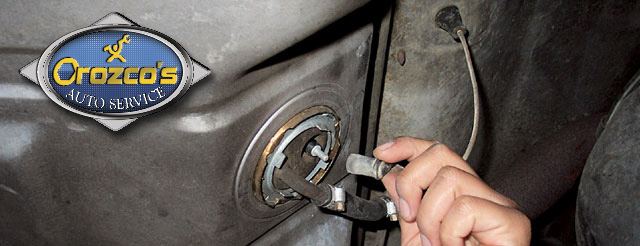
Your fuel gauge reads from the fuel sending unit, a component inside the tank. A float on an arm rises and falls with the fuel level, moving across a resistor. The change in resistance is turned into the reading on your dashboard.
Signs of a failing sending unit
- A gauge stuck on full or empty
- A gauge that moves erratically or drops suddenly
- A gauge that reads wrong after a fill-up
- A fuel light that comes on at odd times
Check the simple things first
Before assuming the sending unit is at fault, check whether the gauge fuse is blown and whether the wiring and connections are intact. Your owner’s manual shows the fuse location, and on many vehicles the gauge shares the instrument cluster fuse.
Why it is a shop job
The sending unit is inside the tank, often combined with the fuel pump, so the job involves handling fuel and lowering or accessing the tank. Fuel vapors are flammable, so this is not a good job for the driveway. For fuel tank and in-tank sending unit work, call our Bellflower shop for a quote.
Do not ignore it
A broken gauge will not stop the engine, but it can leave you without warning when the tank runs low. Keep track of mileage between fill-ups until it is repaired. Our ASE-certified technicians can inspect your vehicle and explain your options. Book at whichever of our shops is most convenient.
Frequently asked questions
Why is my gas gauge not accurate?
A worn sending unit, a bad connection or a blown fuse can cause it.
Can I drive with a broken fuel gauge?
You can, but you risk running out of fuel. Track your mileage and have it repaired.
Book at your nearest shop
Three Orozco's shops across Long Beach and Bellflower. Pick the one closest to you.
Call the shop
nearest you